
Articles · 4 min read
The TikTok Shop sample budget gets approved when you stop selling GMV
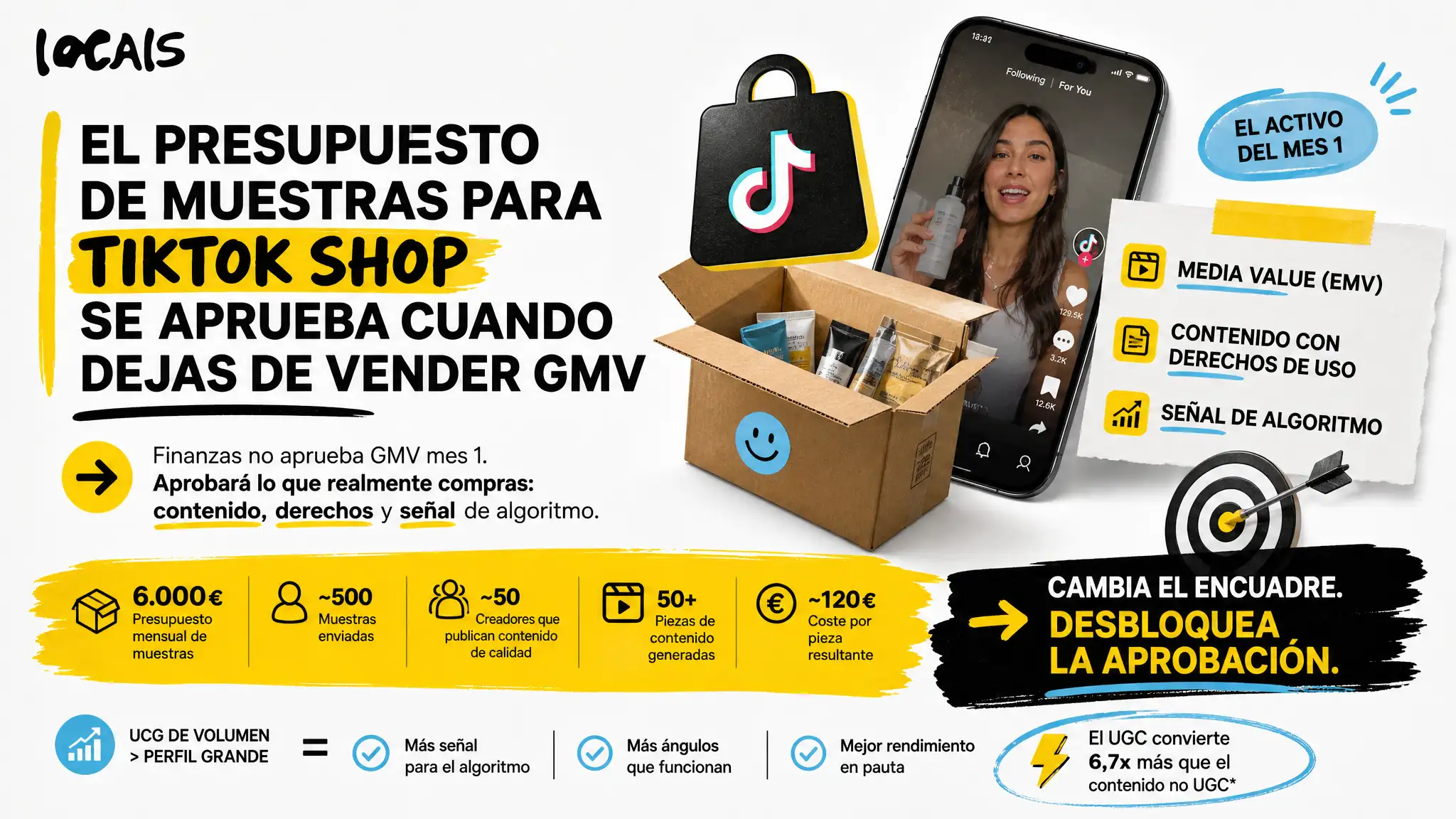
Finance blocks the TikTok Shop sample budget because marketing pitches it against first-month GMV, and that number always loses. The argument that unlocks approval measures what is actually being bought: earned media value, content pieces with usage rights and algorithm signal. GMV is the result of the quarter, not of month one.
The Framing Mistake That Blocks Approval
TikTok Shop puts GMV at the centre of the dashboard, and marketing ends up taking that same metric into the budget meeting. The problem is that in month one there is no optimised listing, no creators with a track record and no accumulated algorithm signal. The GMV you can promise is speculative, and finance discounts it to zero because it is right to: it is a certain cost against an uncertain revenue.
The way out is not to negotiate the number better. It is to change which asset you say you are buying.
What a Sample Budget Actually Buys
Taking a reference campaign, the orders of magnitude are these:
- Monthly sample budget
- €6,000
- Samples sent
- ~500
- Creators publishing quality content
- ~50
- Content pieces generated
- 50 or more
- Resulting cost per piece
- ~€120
Those figures translate into three line items finance knows how to value:
Earned media value (EMV). Earned media value quantifies what it would cost to reach the same audience through paid media or deals with large profiles. When estimated EMV exceeds the cost of the samples, the campaign is justified before counting a single sale. That is the number to take into the meeting.
A content library with usage rights. Every video published by a creator is an asset that, with the rights negotiated from the start, gets reused in Meta Ads, product pages, email and paid social. The cost per piece that comes out of the table above sits far below what a production company charges for equivalent content.
Creative learning. Fifty different angles on the same product, tested in the open by the algorithm, let you know which hook works before spending a euro on paid media. It is market research disguised as seeding.
Content Cost vs Sales Cost: the Move That Unlocks It
The decisive change is one of accounting category, not of figure:
| Current framing | Framing that gets approved |
|---|---|
| "Samples to sell on TikTok Shop" | "Produce 50 content pieces this month" |
| Metric: month-1 GMV | Metric: EMV + cost per piece + assets with rights |
| Competes against: paid ads | Competes against: agency or production budget |
| Perceived risk: high | Perceived risk: low, with a tangible deliverable |
It is the same spend, the same creators and the same product. The only thing that changes is which budget it competes against, and the second framing has the advantage of being the true one: the month-one deliverable is the content library, not the sales figure.
Why Does High-volume UGC Beat Sponsoring One Large Profile?
Sponsoring a large profile generates one piece, one spike in reach and a prohibitive cost per piece. Fifty creators publishing in parallel generate continuity, density and a variety of angles. It is exactly the logic that makes UGC work: volume, repetition and continuity, not the perfect piece.
On TikTok Shop that density also has a compounding effect: the algorithm needs signals to learn who to show the product to. Fifty videos generate fifty times more signal than one, and that speeds up listing optimisation in the weeks that follow.
The performance of UGC in paid media backs the same logic: according to Emplifi's Q1 2026 benchmarks report, user-generated content drove conversion rates 6.7 times higher than non-UGC content that quarter, the highest figure recorded to date.
The Metrics That Hold the Case Until GMV Arrives
GMV does arrive, but in month two or three, once the algorithm has signal and the listing is optimised. In the meantime, these are the metrics that keep the case open:
- Sample-to-post conversion rate. How many of the shipments turn into real content. It is the campaign's operational efficiency metric.
- Total EMV against sample cost. The ratio that justifies the budget before counting sales.
- Cost per piece with rights. Compared against in-house or agency production cost.
- Paid performance of the reused content. When UGC beats brand creative on Meta, the original spend pays for itself twice.
- GMV and listing conversion rate. From month two or three, once the algorithm has enough signal.
💡 Operational tip: Negotiate content usage rights before sending the first sample, not after the video performs. Recovering those rights afterwards is more expensive and sometimes impossible; including them in the initial brief turns every piece into an asset from the moment it is published.