
Articles · 3 min read
UGC converts better than the classic ad because it does not look like advertising
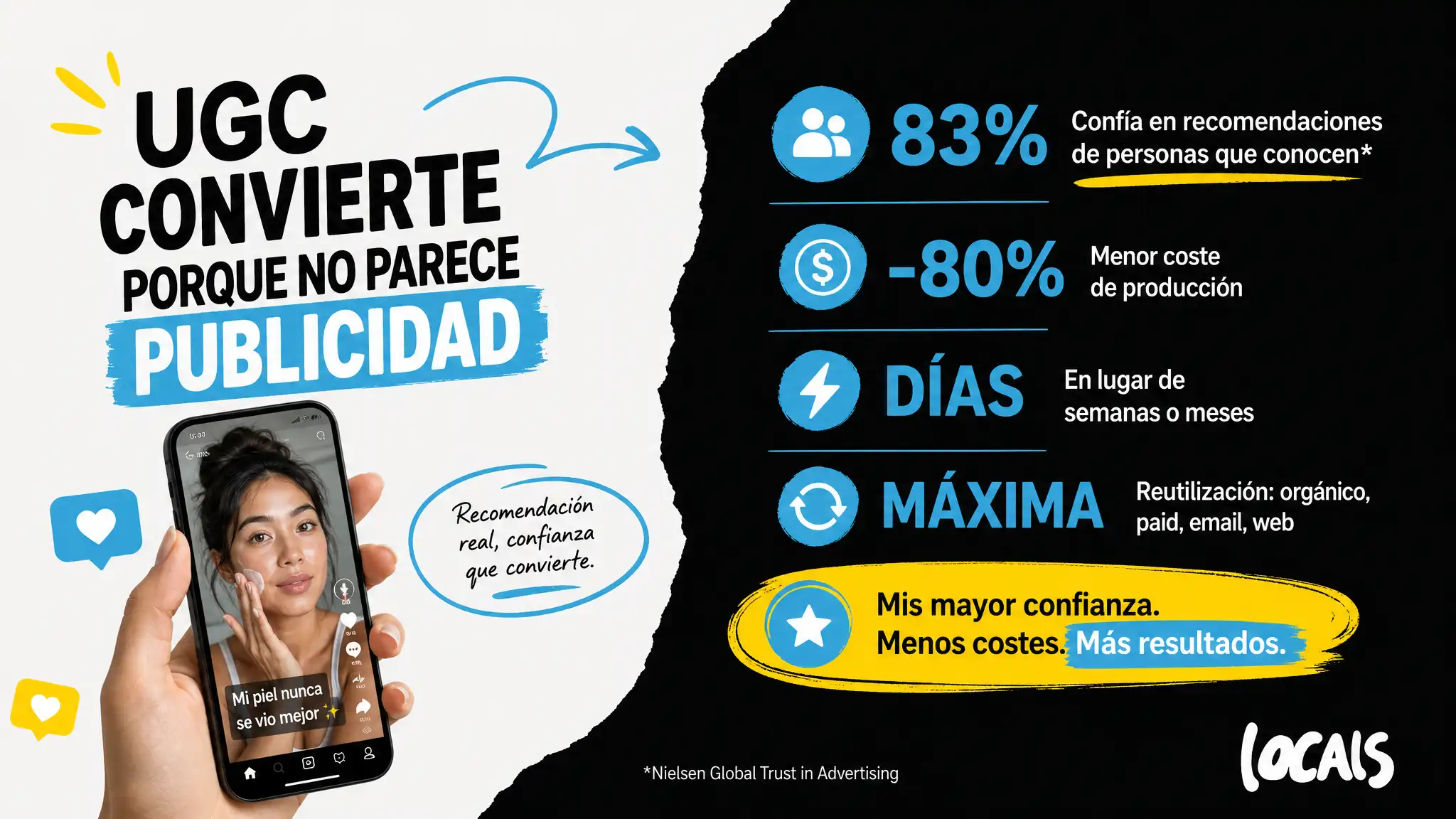
UGC (creator-generated content) outperforms the classic ad because the viewer does not perceive it as advertising. It is the product in use, told by someone credible, in the native format of each platform. The result is higher trust, lower production cost and pieces that work in both organic and paid without moving budget between them.
Why Trust Is the Structural Advantage of UGC
Classic advertising has been losing credibility for decades. Nielsen's Global Trust in Advertising report gathered responses from 30,000 consumers across 60 countries and concluded that 83% trust recommendations from people they know, far above any paid advertising format.
UGC operates in exactly that space. When a creator shows a product in use on their own channel, the viewer processes it as a recommendation from someone close to them, not as a paid impression. That difference in perception is not a nuance: it changes the likelihood that the message is retained and that the viewer acts.
💡 Format key: the content that works is not the one that looks most produced, but the one that fits natively into the feed where it appears. A vertical video shot on a phone performs better on TikTok or Reels than a studio spot, precisely because it does not interrupt.
What Is the Real Difference Between UGC and Traditional Advertising?
The difference is not only aesthetic. It affects four concrete dimensions:
| Dimension | Traditional advertising | UGC |
|---|---|---|
| Viewer perception | Ad, interruption | Recommendation, content |
| Production cost | High (agency, shoot, post-production) | Low (brief, creator, delivery) |
| Production speed | Weeks or months | Days |
| Reuse | Limited by licensing and shelf life | High: organic, paid, email, web |
Production cost is where UGC wins most clearly. With the same budget that funds a single brand spot you can activate dozens of pieces from different creators, in different formats, aimed at different segments.
The Two Channels UGC Feeds at Once
One of the most common misunderstandings is treating UGC either as organic content or as creative for paid, as if those were mutually exclusive decisions. They are not.
The same creator video can be published on the brand's organic profile, used as creative in Meta Ads or TikTok Ads, embedded in an e-commerce product page and distributed in an email campaign. The piece does not change; the distribution channel does.
This dual use turns every UGC campaign into a reusable content library that lasts for months, rather than a one-off expense. A brand that activates eight creators in a month does not get eight posts: it gets a pool of assets it can rotate, test and optimise throughout the quarter.
Does UGC Completely Replace Brand Advertising?
No. UGC is the most efficient content engine available today, but it does not cover everything a strategy needs.
Brand advertising builds long-term positioning and carries values that UGC cannot always convey with the same consistency. Major launches, repositionings and institutional campaigns still need controlled production.
What UGC solves is the volume of everyday content: the pieces that feed the algorithm, the ones that test creative in paid, the ones that generate social proof at the point of purchase. That is where the classic ad is too slow and too expensive to compete.